
Restaurant Electrical Installation in Miami-Dade and Broward: 7 Things to Check Before Opening
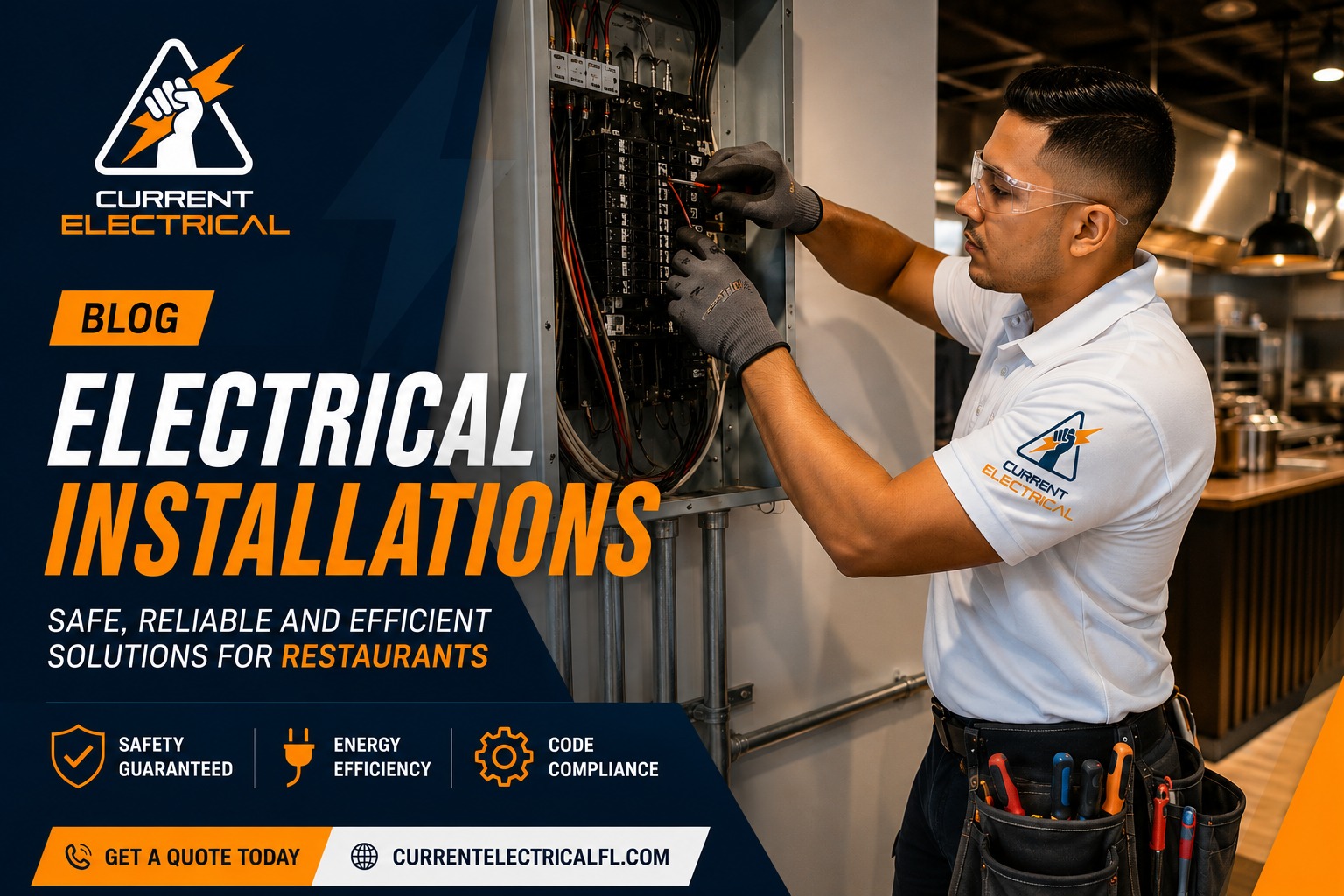
Opening or remodeling a restaurant requires more than installing lights and outlets. Ovens, refrigerators, freezers, exhaust systems, dishwashers, ice machines, lighting, and air conditioning may all operate at the same time.
If the electrical infrastructure was not designed for that level of demand, the business may experience tripped breakers, overheated components, equipment shutdowns, unexpected repairs, and delays in opening.
That is why hiring a restaurant electrical contractor Miami-Dade and Broward during the planning stage can help reduce risk and prepare the restaurant for safe, reliable operation.
1. Start With an Electrical Load Calculation
Every restaurant has different electrical needs. A small café does not require the same capacity as a full commercial kitchen with electric ovens, large refrigeration systems, and powerful exhaust equipment.
Before purchasing equipment, a commercial electrician for restaurants should review:
- Required voltage.
- Amperage.
- Number of phases.
- Available electrical capacity.
- Distance between the panel and the equipment.
- Need for additional circuits.
- Possible future expansion.
Why Should This Be Done Before Finalizing the Design?
If the load calculation is completed too late, the project may require revised plans, a new subpanel, a service upgrade, or the reopening of finished walls.
Early planning helps reduce change orders, construction delays, and unexpected costs.
2. Verify the Electrical Panel Capacity
A location that previously operated as an office, retail store, or small business may not be prepared for the electrical demand of a commercial kitchen.
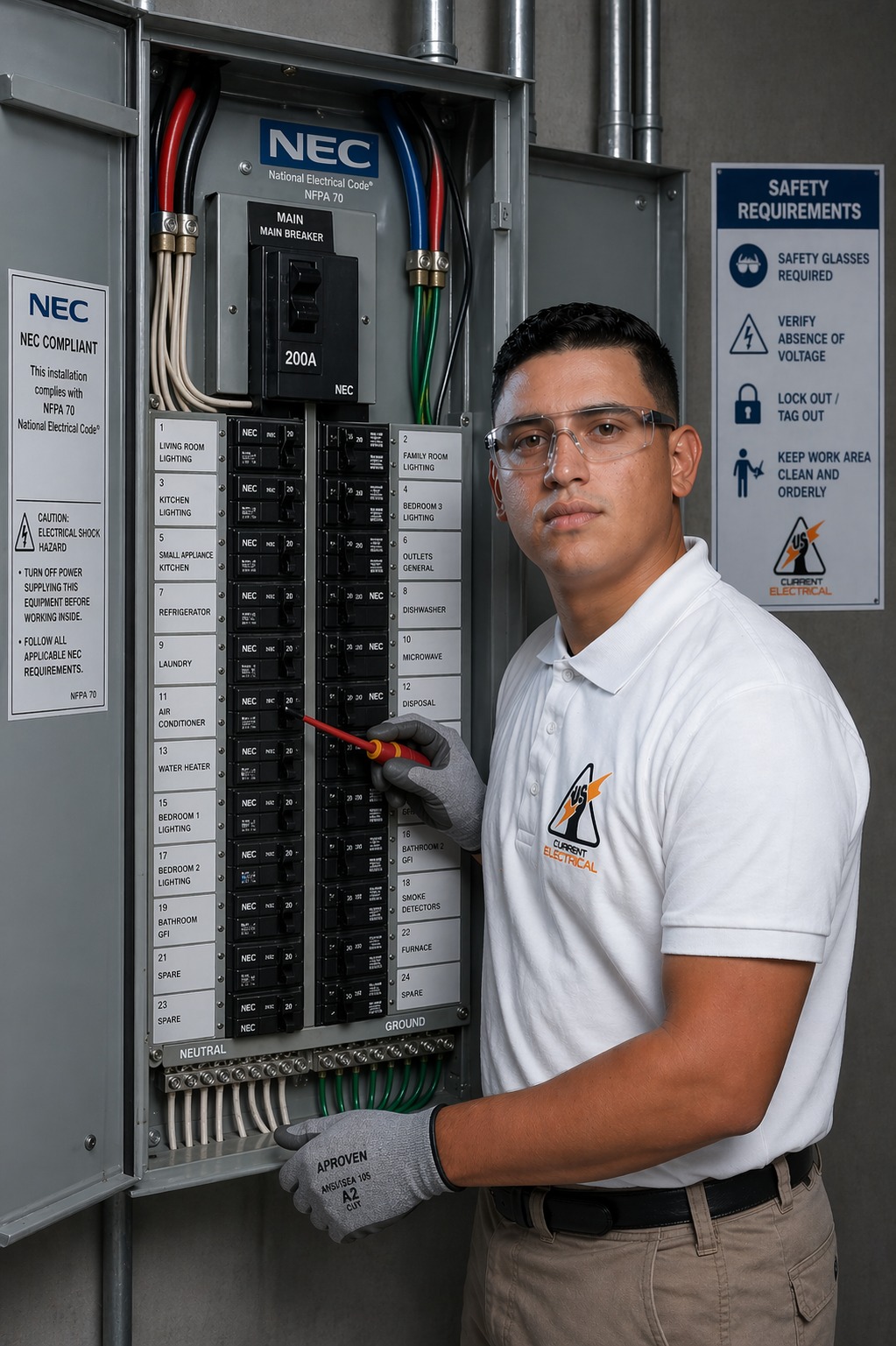
The panel must have enough capacity, space, and proper protection to supply the kitchen, dining room, HVAC system, refrigeration, and other essential equipment.
When the existing capacity is not enough, the project may require a restaurant electrical panel upgrade, a new subpanel, or an electrical service upgrade.
3. Install Dedicated Circuits for Kitchen Equipment
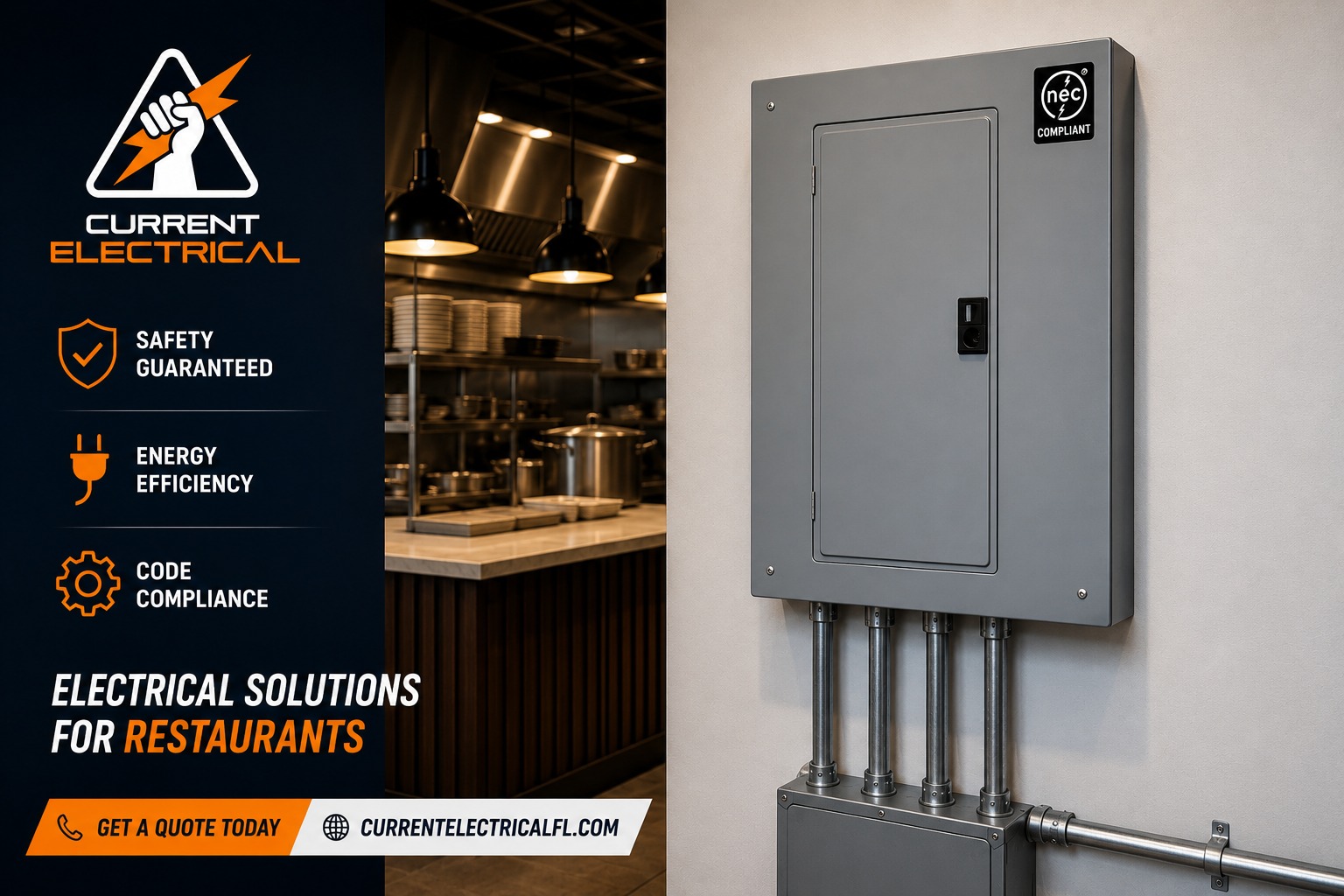
Commercial ovens, refrigerators, freezers, dishwashers, ice machines, fryers, and exhaust equipment may require dedicated circuits for commercial kitchen equipment.
A dedicated circuit allows each major appliance to have its own electrical protection.
This reduces the risk of overloads and makes it easier to isolate a problem without shutting down the entire kitchen.
Dedicated circuits also help technicians locate faults faster and reduce operational interruptions.
4. Confirm Whether Three-Phase Power Is Required
Some commercial kitchen equipment requires three-phase power for commercial kitchens.
Three-phase power can distribute high electrical loads more efficiently, but not every commercial property has this type of service available.
Review Equipment Specifications Before Purchasing
Before ordering ovens, compressors, refrigeration systems, or exhaust equipment, confirm:
- Voltage.
- Amperage.
- Number of phases.
- Connection type.
- Manufacturer requirements.
Purchasing incompatible equipment may force the owner to modify the electrical system or replace the equipment.
5. Coordinate the Kitchen, Lighting, and Exhaust Systems
A commercial kitchen electrical installation must be coordinated with:
- Exhaust hoods.
- HVAC systems.
- Fire protection systems.
- Lighting.
- Refrigeration.
- Cooking equipment.
- Plumbing and mechanical contractors.
The kitchen requires bright, functional lighting.
The dining room requires lighting that supports the customer experience.
Exit areas and circulation paths must remain visible and safe.
All contractors should work from a coordinated design to avoid conflicts between conduit, wiring, ductwork, piping, and equipment.
6. Inspect Existing Electrical Problems Before Adding New Equipment
If the property has tripping breakers, flickering lights, warm outlets, burning smells, partial power loss, or recurring electrical problems, these issues should be corrected before connecting new restaurant equipment.
Professional commercial electrical repairs and troubleshooting can identify:
- Loose connections.
- Overloaded circuits.
- Damaged breakers.
- Faulty wiring.
- Voltage problems.
- Distribution issues.
- Worn electrical components.
7. Plan for Permits, Inspections, and Future Growth
A restaurant electrical build-out may require:
- Electrical load calculations.
- Plans.
- Permits.
- Inspections.
- Coordination with other contractors.
- Equipment schedules.
- Service upgrades.
A design-build electrical contractor can participate from the design stage through project completion.
This approach helps coordinate electrical work with the overall construction schedule.
The electrical system should not be designed only for opening day. It should also consider:
- Additional refrigerators.
- New cooking equipment.
- Expanded dining areas.
- New technology.
- Future remodels.
- Increased electrical demand.
A well-organized electrical system can reduce the cost and disruption of future upgrades.
Why Hire a Commercial Electrician for a Restaurant?
A commercial electrician for restaurants understands:
- Simultaneous electrical loads.
- Dedicated circuits.
- Commercial panels.
- Three-phase power.
- Equipment coordination.
- Electrical safety.
- Troubleshooting.
- Expansion planning.
The goal is not simply to install wiring. The goal is to protect:
- The opening date.
- The equipment.
- The building.
- The staff.
- The customers.
- The owner’s investment.
- Business continuity.
Current Electrical FL provides commercial electrical services, panel upgrades, troubleshooting, and Design-Build electrical solutions throughout Miami-Dade and Broward.
If the restaurant experiences an urgent electrical failure, a 24/7 emergency electrician can help address power loss, burning smells, partial outages, and other serious electrical problems.
Restaurant Electrical Services & Planning
Before purchasing all equipment or starting the remodel, request an evaluation of the existing electrical infrastructure. Proper planning for a restaurant tenant improvement electrical project can reduce surprises and support a safer, more predictable opening.
Frequently Asked Questions
Electrical planning should begin during the design stage and before all equipment is purchased. This allows the contractor to calculate loads, confirm voltage and phase requirements, verify panel capacity, and identify necessary upgrades.
No. The answer depends on the existing capacity, the total electrical demand, and the equipment selected. A commercial electrician should determine whether the project only needs circuit redistribution, a subpanel, or a complete service upgrade.
CURRENT ELECTRICAL FL
Service areas HOLLYWOOD ELECTRICAL INSTALLATIONS & UPGRADES — HOLLYWOOD FL 24/7 EMERGENCY...
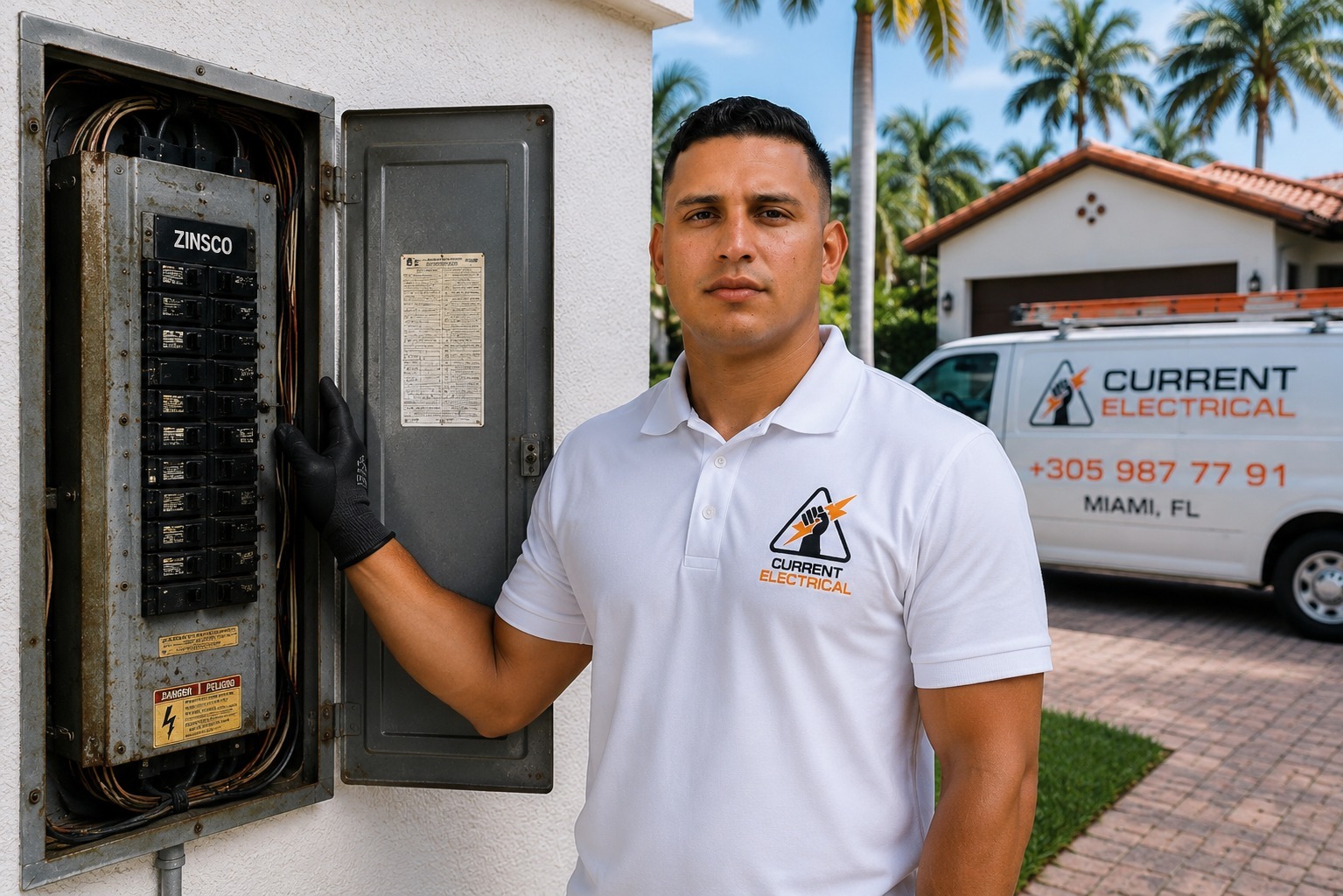
Can an Old Electrical Panel Affect Your Home Insurance in Florida?
Home HOLLYWOOD ELECTRICAL INSTALLATIONS & UPGRADES — HOLLYWOOD FL 24/7 EMERGENCY ELECTRICIAN...
The Ultimate 2026 Guide: EV Charger Installation in Miami-Dade & Broward and Advanced Energy Management
Home HOLLYWOOD ELECTRICAL INSTALLATIONS & UPGRADES — HOLLYWOOD FL 24/7 EMERGENCY ELECTRICIAN...